 USD


ADJ Ajust Seal /Dust Seal FA Seal
- Description
Product Overview
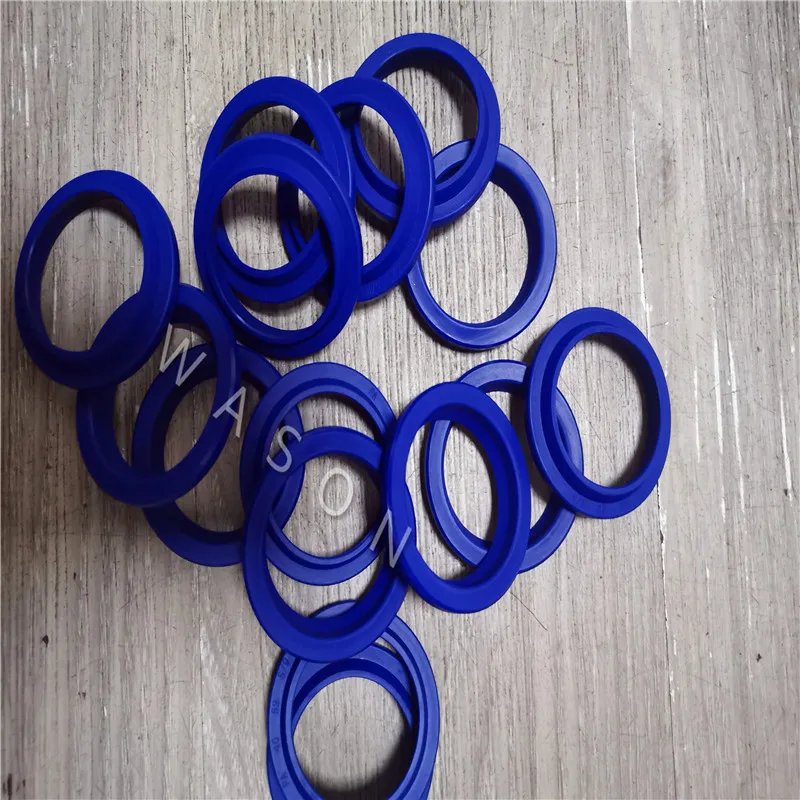
An FA dust seal is a single-lip wiper ring that fits at the outboard end of a hydraulic cylinder or a track adjuster, ahead of the main rod seal. Its job is to scrape grit, mud and track dust off the rod before any of it reaches the pressure seals behind. The lip is the part that wears, and it wears from the outside in.
Every size in this range is supplied as a loose ring rather than as part of an adj seal kit. There is no box of paired parts to buy around — you name the code and receive that ring, which is what a workshop wants when one lip has failed and the rest of the stack is still sound.
The list starts at mini-excavator bores and runs up to mining-size cylinders. Codes are written bore first, outside diameter second, height pair last, and every size here follows the same pattern, so a number read off one machine can be compared directly with a number from another.
Most orders fall into one of two shapes. A workshop buys one or two rings to close a repair that is already open on the bench; a parts counter buys a dust seal in larger quantities across the bore sizes that move in its own market. Both come off the same shelves.
When it comes to excavator dust seals, we work from codes rather than machine models, because one profile is shared across many brands and the model plate rarely tells you which lip is inside the cylinder. Send the number from the old ring and the match becomes a look-up rather than a guess.
The name takes a little unpacking. ADJ supports the adjuster assembly the ring often serves, FA describes the profile, and the figures describe the size — so one ring can appear as an ADJ seal in one list and a dust seal in another without either being wrong. The code settles it.
Reading the Size Code
- Read the letters first. FA is the profile code — a single dust lip on a ring body. A ring with different letters has a different lip shape, so check that the number on the old excavator adj seal or cylinder wiper starts the same way before comparing figures. The first figure is the bore: the diameter the lip runs against.
- FA30 means a 30 mm bore. The second figure is the outside diameter that presses into the housing.
- On FA30*42*5/9 that is 42 mm. The last pair is the height, and both figures count. A 5/9 ring will not swap for a 6/11 ring even when the first two figures match exactly. If the marking has gone, measure with a caliper: bore, outside diameter and height. On a worn ring the outside diameter is usually the more reliable of the three, because the lip takes most of the wear. Not every list writes the code the same way, and an adj seal brand using a different notation may put the outside diameter first. Compare figures against a measured ring instead of assuming the order.
- Decide what you are ordering.
Applications
- Track adjuster cylinders. The ring sits where the adjuster rod leaves the cylinder and takes track grit with every tensioning stroke. In a full adjuster rebuild the excavator adj seal is one part of the stack rather than the whole repair.
- Boom, arm and bucket cylinder rod ends. The wiper position on the cylinder head, renewed whenever the rod seal behind it is replaced so fresh grit does not undo the work.
- Mini and compact excavators. The small bores, FA12 to FA30, are where most compact machine work starts, and the same rings also appear on small loaders and backhoes.
- Large mining and quarry machines. Bores above 150 mm sit on cylinders working in blasted rock and haul-road dust, where the lip sees constant abrasive loading.
- Breaker and hammer servicing. A breaker dust seal works under impact rather than steady rod travel, so it fails differently from a cylinder wiper — check it whenever the hammer is opened, and match the number on the old ring against this list.
- Parts counters and resellers. Buying fa dust seals in the full range of sizes that sell locally means a customer with a leaking wiper can be served the same day instead of waiting on an order.
- Demolition and debris handling. Concrete dust and fine aggregate are harder on a wiper than soil, and sites like these are where a lip goes from serviceable to torn between inspections.
Specifications
Every size in this band uses the 5/9 height pair. 32–50 mm bore. FA32*44*5/9 to FA50*62*5/9. Both height pairs appear here — FA38*44*6/11, FA40*49*6/11, FA45*54*6/11 and FA50*59*6/11 sit in the 6/11 group — so read the height as well as the diameters. 55–100 mm bore. FA55*69*6/11 to FA100*114*6/11, all in the 6/11 height, covering mid-size excavator cylinder heads and adjusters. 105–150 mm bore. FA105*121*7/13 to FA150*170*7/13, in the taller 7/13 height, for larger cylinders and heavier adjusters. 155–210 mm bore. FA155*175*7/13 to FA210*230*7/13, still in the 7/13 height. 220–300 mm bore. FA220*240*7/13 to FA300*320*7/13 — the largest sizes listed, usually found on mining and quarry machines. 8/11 height option. FA70*84*8/11, FA80*94*8/11 and FA85*99*8/11 share bore and outside diameter with their 6/11 versions but carry a different height pair, so an excavator dust seal that measures taller than the 6/11 ring needs the 8/11 code.
Fitting & Care
Fitting. Seat the ring square in its housing before the rod goes back through. A lip that starts cocked wears on one side and can let grit past within a short running period, which is why a seal that fails early is usually a fitting problem rather than a material one.
Assembly lubrication. Wet the lip with clean hydraulic oil before the rod is pushed back in. A dry start does more damage to a new dust lip than the working conditions that follow it.
Storage. Keep spare rings in the bag they arrive in, away from direct sunlight and hot workshop surfaces. An excavator dust seal that has sat on a sunny shelf for a few seasons can harden without ever being fitted, and a hardened lip will not follow the rod.
When to change it. A torn lip, a hardened edge, or a ring that has begun to sit loose in its housing are all reasons to replace. Leaving a worn wiper in place lets grit reach the rod seal behind it, which turns a small job into a full reseal.
Handling. Keep rings off the floor and away from a tray of loose bolts; a nick on the lip edge is enough to start a leak path. If a ring has been dropped on concrete, look at the lip before it goes in.
Ordering & Size Confirmation
- Send the code from the old ring, or from the bag it came in; the same code appears on an adj seal kit label. If the marking has gone, send the bore, outside diameter and height you measured, and we will match the closest size on the list.
- Say how many you need. Single rings and fa dust seals in larger quantities come from the same stock, and mixed sizes travel in one order.
- Send breaker numbers as written too — a breaker dust seal is matched from its number, not from the machine it came off.
- Confirm the material and current availability for the exact size before you schedule the repair; the sizes at either end of the list are worth checking ahead of time.
- Ask about packing if the rings are going onto a customer's shelf. Each one is bagged and labeled with its code, so a mixed order can be sorted at the counter without measuring. As an excavator dust seal specialist, we would rather answer a sizing question before dispatch than replace a wrong ring afterward, so send what you have and let us check it.
Scale & Supply Capability
Guangzhou Wason has been providing construction machinery parts since 2015, drawing on a broad network of trusted partners and holding stock for fast dispatch so common items move without long waits. Our catalogue covers the replacement parts we list, and we help customers combine mixed orders, check samples before dispatch and coordinate customized requirements when a standard item will not do. Customers across Africa, the Middle East and South America rely on us for steady supply, careful inspection and export paperwork handled end to end.


